

TCE Helps Position UT as Leader in AI’s Engineering Revolution
Artificial intelligence has integrated into nearly all sectors of society, requiring thoughtful and groundbreaking approaches to implement new technologies and accelerate scientific discovery. The Tickle College of Engineering (TCE) is helping position the University of Tennessee as a hub for applied high-impact AI innovation.
From materials discovery to healthcare to agriculture, TCE is at the forefront of the AI revolution. Research being done across every department in the college has the potential to improve lives, create jobs, and make the world safer while educating the field’s future workforce.
Hundreds of TCE professors and students are leveraging AI tools for problem-solving and process optimization while emphasizing ethical and community-centered outcomes. They have integrated AI into workflows to improve efficiency, safety, maintenance, and forecasting. They are creating tools to responsibly assimilate AI into engineering processes to manufacture components and parts that drive everyday life.
“As artificial intelligence rapidly evolves, the Tickle College of Engineering is investing in not only AI-related research and growing its tremendous faculty, but we are also rapidly modernizing our curriculum and college operations,” said TCE Dean Matthew Mench, the Wayne T. Davis Dean’s Chair of the college. “What we have learned is, while AI can accelerate lab discovery and foundational learning, it also heightens the need for critical thinking, innovation, experiential learning, and cross-disciplinary collaboration. TCE remains committed to world-class research and a modernized engineering education that prepares graduates to lead in the age of AI.”
Through multidisciplinary projects on campus, TCE is helping to develop and deploy AI solutions that advance the prosperity and well-being of communities and organizations throughout the state of Tennessee and beyond. TCE’s research and industry collaborations are contributing to growth in key economic sectors, including nuclear energy and security, advanced manufacturing, agriculture and forestry, healthcare, and mobility.
As part AI Tennessee, which the university launched to develop and deploy AI solutions that advance the health and prosperity of communities and organizations throughout Tennessee, UT developed AI TechX. The initiative was created to empower Tennessee communities and industry partners to adopt AI technologies that enable high-quality job creation and economic growth.
Eight of the nine inaugural projects selected for AI TechX funding last year involved engineering faculty, including using AI and sensor technologies to improve pedestrian safety, harnessing AI and quantum computing technologies in geospatial intelligence for national defense applications, and developing AI systems and methodologies for real-time quality inspection in automotive production lines.
“The Tickle College of Engineering has been an extremely good collaborator when it comes to multidisciplinary partnerships with other groups across campus,” said Caleb Knight, director of AI TechX. “Holistically, we’re counting on engineering to be willing to partner with other departments, like the College of Social Work, Haslam College of Business, Herbert College of Agriculture—anywhere where there is domain expertise that can leverage AI but doesn’t have AI expertise. Engineering faculty have that core knowledge around AI to help.”
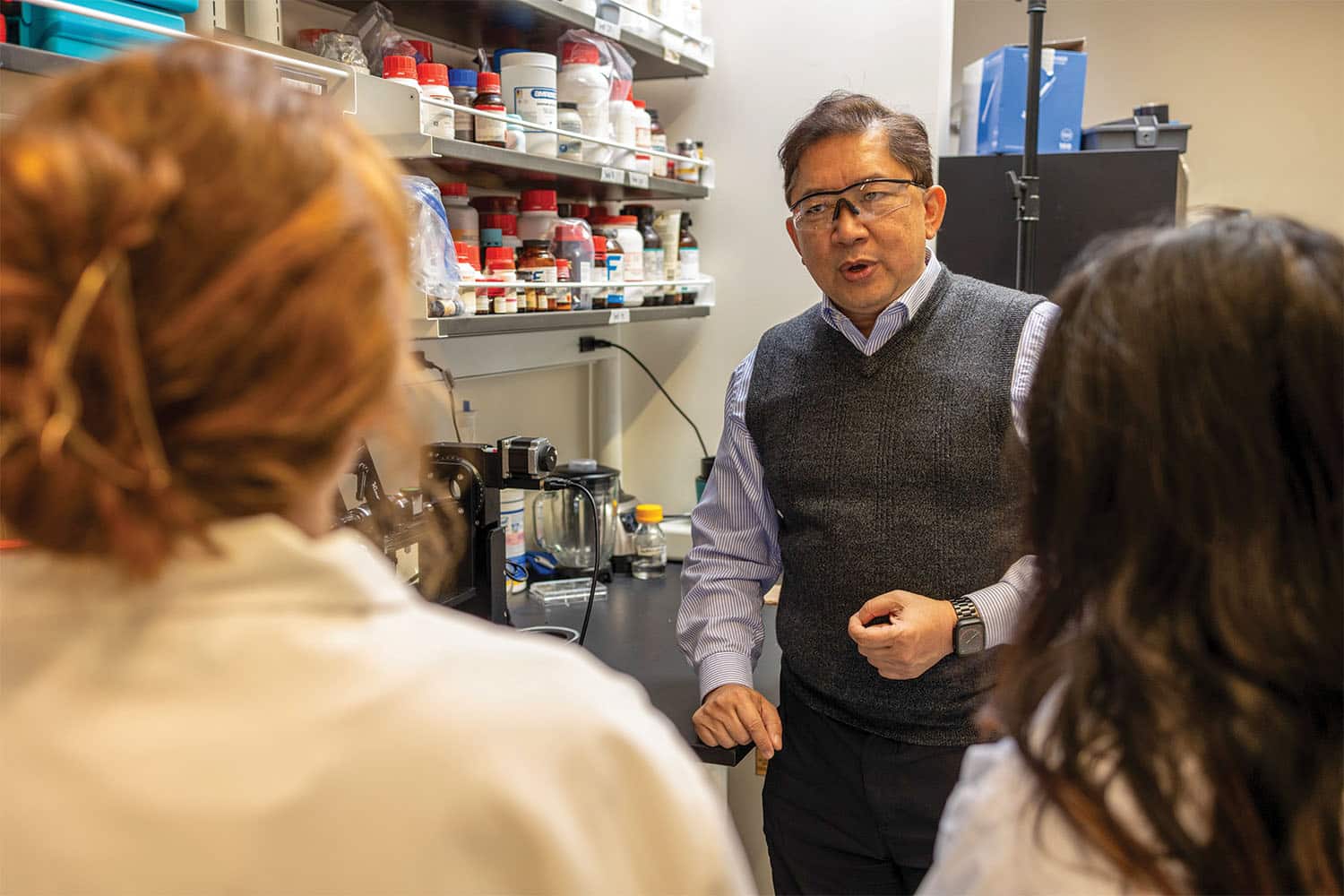
UT-ORNL Governor’s Chair Rigoberto Advincula, is exploring self-driving labs that integrate AI, robotics, and automated systems.
Accelerated Discovery
Through their work in neuromorphic algorithms, applications, circuits, and devices, the faculty members in the Min H. Kao Department of Electrical Engineering and Computer Science (EECS) are on the cutting edge of AI trends. By emulating the brain’s processing, these systems aim to improve energy efficiency and speed for AI/ML tools.
In the Department of Materials Science and Engineering, UT has become a national model for how machine learning (ML)–driven automated materials discovery and scalable experimentation can shorten the path from concept to deployment. UT is one of only three programs in the country that works on automated characterization, helping advance the nation’s competitiveness in nuclear, aerospace, and advanced manufacturing technologies while training the next generation of scientists and engineers.
Rigoberto Advincula, UT-ORNL Governor’s Chair of Advanced and Nanostructured Materials in the Department of Chemical and Biomolecular Engineering (CBE), has been exploring the potential of self-driving labs to drive innovation in polymer materials to enable quicker discovery of radiopharmaceuticals and critical materials. The labs integrate AI, robotics, and automated systems to facilitate new scientific discoveries, optimize process engineering, and rapidly accelerate research and development for manufacturing in the fields of chemistry and materials science.
“This is looking at the laboratory of the future, where you have scientists with a lot of tools being able to do their discovery of radiopharmaceuticals and critical materials faster,” Advincula said. “They will have the ability to make new polymers with a higher performance or better properties much faster than has ever been done before.”
In a project that could position UT as a leader in the space of student funding, Anahita Khojandi, a professor in the Department of Industrial and Systems Engineering (ISE) is collaborating with several TCE administrators to use AI to improve the efficiency, agility, and effectiveness of scholarship allocation at UT by having AI automate parts of the process that are more mundane while preserving staff control and trust.
“At colleges and universities, scholarships are one of our most powerful tools for access, recruitment, retention, and student success. Yet the way we award them is often fragmented, manual, and time-intensive,” Khojandi said. “In the short term, the potential impact is operational, such as less time spent on manual matching and faster award decisions. But the bigger impact is strategic, where the AI tool will enable us to make earlier scholarship offers to attract the best and brightest students, improve enrollment yield, and better align students and awards to improve award utilization.”
By The Numbers
8 of 9
inaugural AITechX projects involve engineering faculty
9
engineering departments engaged in AI research
100’s
of faculty/students using AI tools
1 of 3
programs in the country working on automated characterization for materials discovery
AI applications spanning healthcare, agriculture, manufacturing, energy, defense
Improving Medical Outcomes
In the healthcare sector, ISE Professor Xueping Li, Assistant Professor Bing Yao, and Joint Adjunct Assistant Professor Tom Berg are using AI/ML to provide treatment plans to breast cancer patients more quickly by analyzing pathology reports and other clinical records to determine how much breast cancer is in the body.
“If you were to diagnose cancer stages manually from these 300,000 pages—if you did it by hand, and you didn’t eat and didn’t sleep—it would take about 14 years,” Li said. “With these algorithms, we were able to do it in under one hour.”
Yao is also using advanced machine learning techniques to develop new surgical simulation and optimization tools to personalize treatment for atrial fibrillation, an irregular heartbeat disorder caused by misfiring cardiac nerves.
EECS Assistant Professor Hector Santos-Villalobos received an AI TechX grant to use his expertise in computer vision to develop AI-driven analytics for the UT football team that aims to prevent injuries and maximize player performance.
CBE Associate Professor Belinda Akpa is integrating predictive modeling and machine learning tools into the development of antigens and delivery platforms for specific viral or bacterial families.

EECS Assistant Professor Hector Santos-Villalobos is developing AI-driven analytics for the UT football team to prevent injuries and maximize player performance
In the Department of Biomedical Engineering, Professor Jindong Tan is part of a team working on novel techniques for implantable surgical cameras that will improve patient outcomes. The device, which is operated by a robot from outside, integrates AI technologies to provide different view angles and feedback to surgeons during the procedure.
Khojandi is working on a project funded by the Department of Veterans Affairs Office of Connected Care to examine how using AI and smartwatches can support providers in managing Parkinson’s disease patient symptoms in veterans, particularly in rural and remote settings.
Farmlands and Weather Forecasts
AI has become an integral component in agriculture and weather forecasting, helping increase crop yields, reduce waste, prevent widespread damage, and develop safety plans.
Computer science Associate Professor Charles Cao, an expert in agriculture AI-driven digital twins, is leading a worldwide project to develop a range of AI-based tools that help farmers detect threats early, manage resources more efficiently, and make better-informed decisions in the field. The project aims to reduce crop losses from pests and disease and decrease fertilizer and water usage.
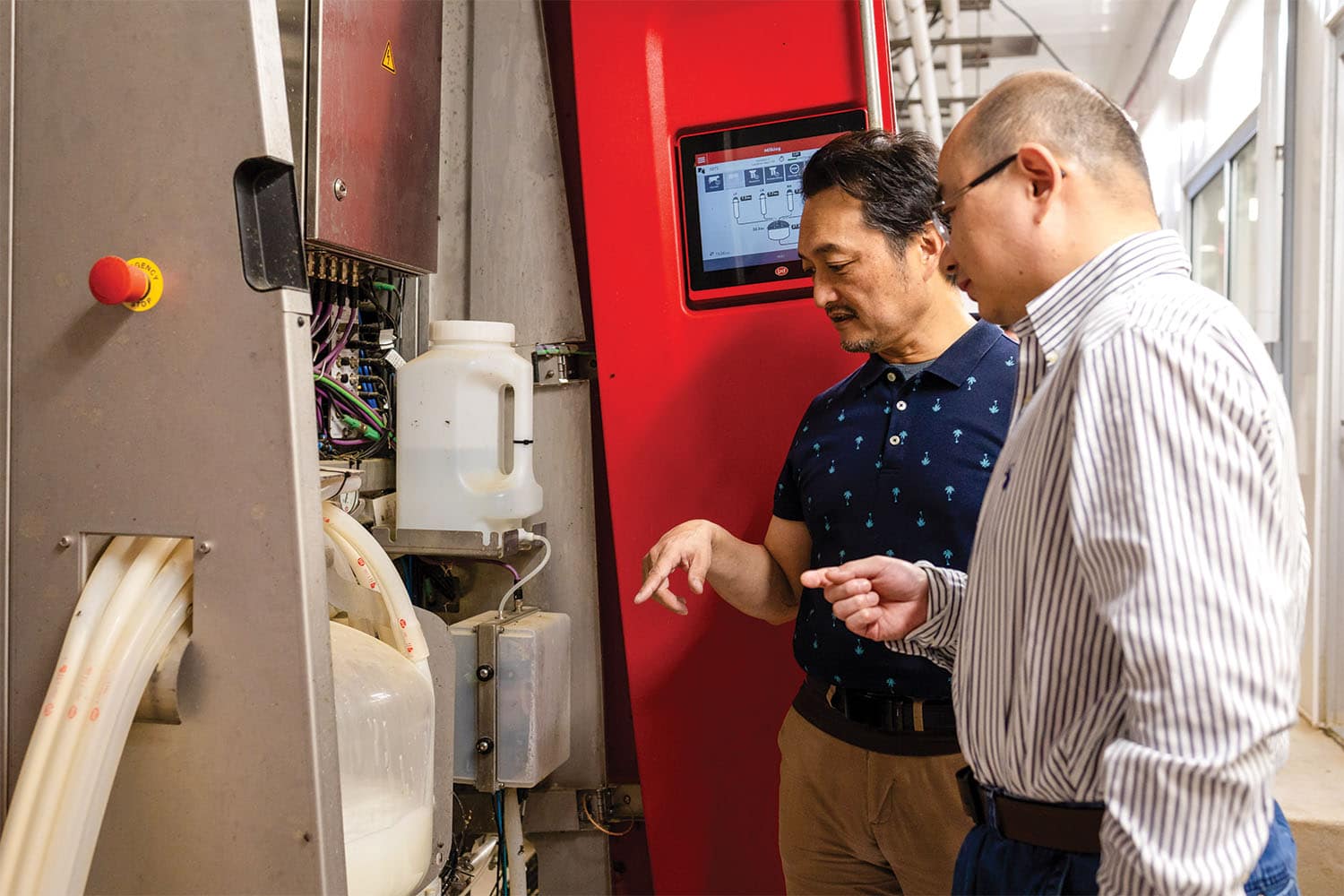
In the Department of Civil and Environmental Engineering (CEE), Chancellor’s Professor Joshua Fu and Research Associate Professor Jia Xing are using AI to improve the accuracy of air quality forecasting to help avoid devastating social and economic impacts stemming from volatile weather patterns. Xing developed a ML-based atmospheric chemistry model for global applications in air quality forecasting and management that has been adopted by the U.S. Environmental Protection Agency.
In the wake of Hurricane Helene, CEE Assistant Professor Haochen Li led a project that developed a deep learning-empowered real-time high-resolution flood hazard forecasting system for the Southern Appalachians. The system enables stakeholders to better assess risks, plan emergency responses, develop infrastructure, and implement mitigation strategies.
Trusted AI Agents
Part of UT’s mission in the AI space is ensuring AI systems are responsibly implemented while working to provide alternative energy sources needed to meet the consumption demands stemming from their use.
ISE Assistant Professor Beau Schelble is researching “AI teammates,” which are AI-powered agents designed to act as digital team members rather than simple chatbots. In a cooperative research agreement with the Army Research Office, Schelble’s lab is studying human-compromised AI dynamics for the first time and creating guidelines for effectively preventing, identifying, and recovering from attacks that compromise AI teammates. The results could revolutionize decision-making in manufacturing, nuclear energy, disaster recovery, healthcare, and more.
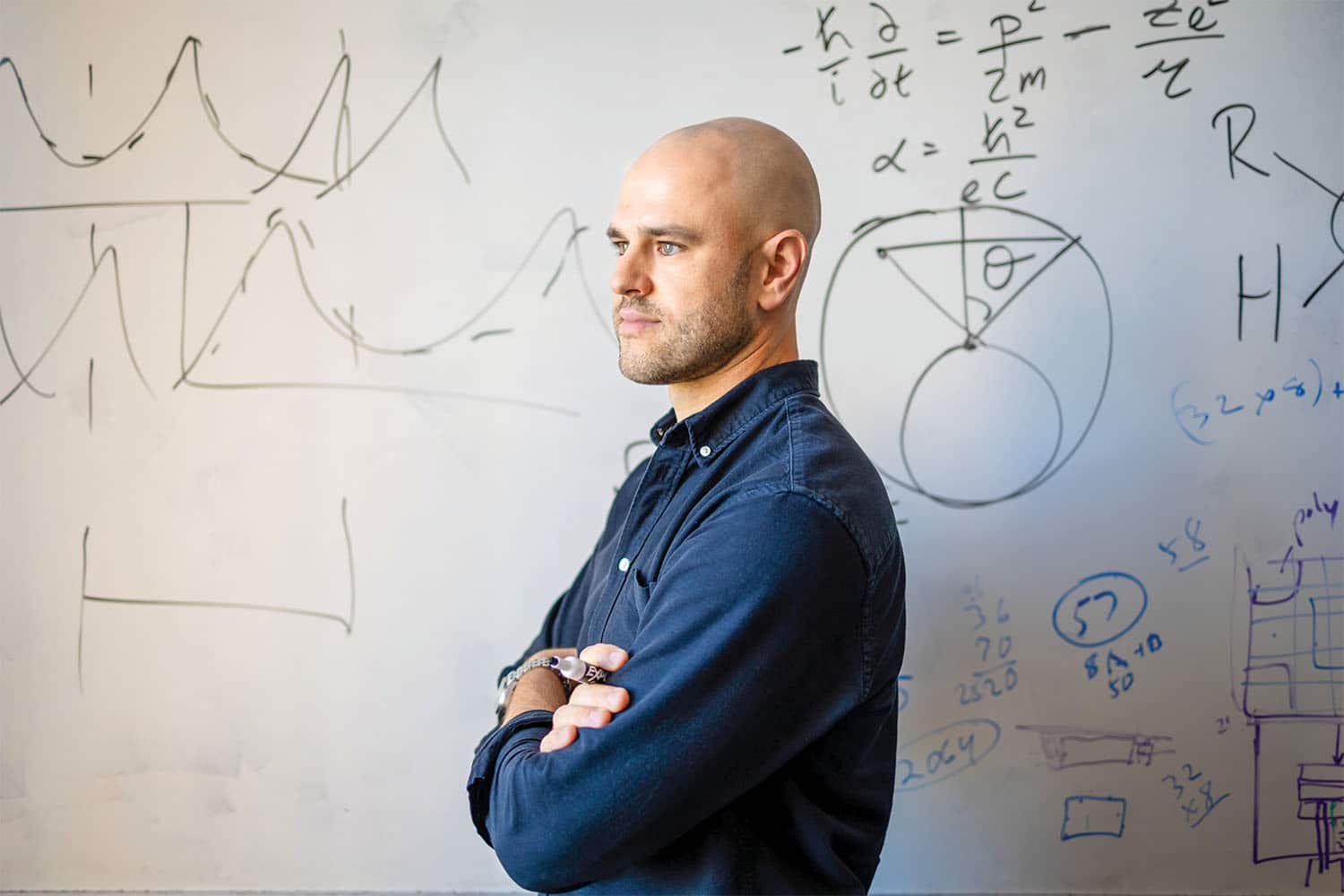
NE Associate Professor Vlad Sobes is developing AI-based algorithms to design nuclear reactors.
In the Department of Nuclear Engineering, Associate Professor Vlad Sobes is working to develop AI-based algorithms to design new nuclear reactors that would still be subjected to the same rigorous evaluations as human-designed systems to prevent safety risks.
“Human engineers tend to start from familiar geometries, known fuel arrangements, or historically successful concepts,” Sobes said. “AI-driven optimization allows us to step outside those conventions and explore entirely new configurations. In doing so, the algorithms can uncover solutions that are difficult, if not impossible, for a human to systematically find.”
Through their work on research projects and their exposure to AI education in UT’s applied engineering classes, TCE’s undergraduate and graduate students are getting hands-on experience with AI/ML that will prepare them to be leaders who will shape the next generation of engineering.
“The Tickle College of Engineering’s role in this whole process of AI growth and innovation is critical,” Knight said. “By doing research collaborations with industry, we are creating workforce pipelines that TCE students are going to be able to fill. This research leads to new technologies that create new types of careers for our graduates.”
Contact
Rhiannon Potkey ([email protected])