
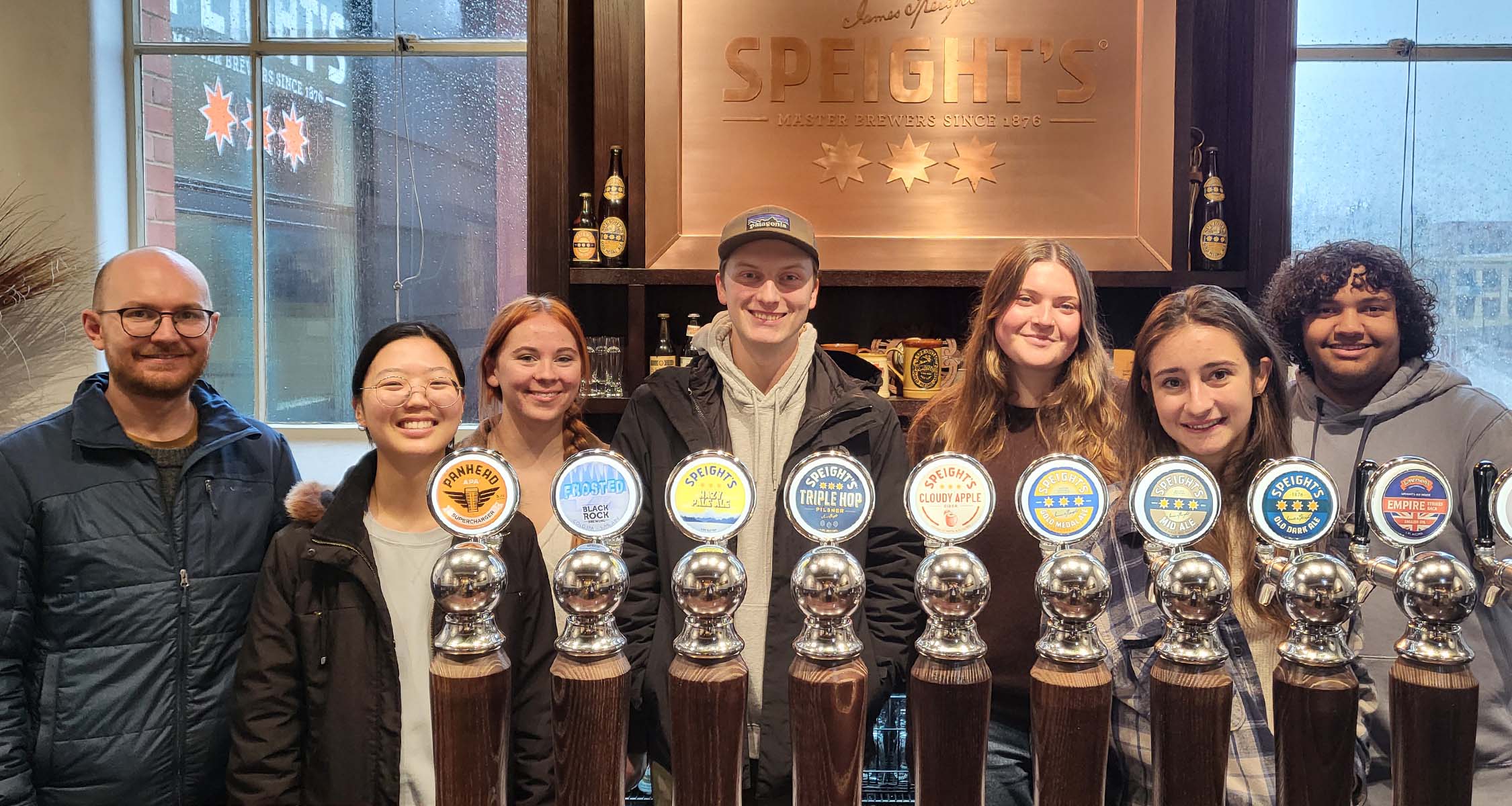
Nikki Johnson knew she wanted to pursue a career involving chemical engineering, but she wasn’t sure what area would fit her best. Johnson had never considered opportunities in the food industry until seeing a flier about the International Research Experiences for Students (IRES) program at the University of Tennessee that is focused on food innovation and sustainability.
Johnson, a junior chemical engineering major, was selected to participate in the inaugural cohort, which traveled to New Zealand for eight weeks over the summer working with professors in the Department of Food Science at the University of Otago in Dunedin and engaging with graduate students and postdoctoral researchers.
“Now food science is definitely where I want to go,” Johnson said. “I want to work for a food company, and I want to work in research because I love the lab side of things and using my engineering background in a hands-on way to make an impact there.”
Funded by a National Science Foundation grant, IRES is three-year project that is a collaboration between the United States and New Zealand to train engineering students in interdisciplinary food science and innovation research. The US partners are Michael Danquah, professor in the Department of Chemical and Biomolecular Engineering (CBE) at UT, who is the principal investigator, and Tao Wu, associate professor in the Department of Food Science at the UT Institute of Agriculture (UTIA). The New Zealand partner is the University of Otago.
Johnson was one of six students in the inaugural UT cohort that conducted research, gained hands-on research experience, and learned about the food ecosystem and culture in New Zealand.
“The experience for me was a little bit life changing,” said Elijah Roach, a junior biosystems engineering major. “Getting the chance to learn about food science was very interesting. Getting to meet professionals, hear talks, and visit companies—those are things that I would have never normally gotten do with engineering. That alone was extremely rewarding.”
Appealing Apples Research
During the eight weeks in New Zealand, the UT students performed research at Otago on apples using pulsed electric field (PEF) technology. PEF applies short, high-voltage pulses of electricity to food to disrupt cell membranes to help kill bacteria, improving food safety and shelf life without significant heat.
The UT students were researching how PEF impacted the retention of phytochemicals in apples after they were sent through a batch operation. The students recorded the nutritional properties before and after the process.
“The main takeaway was that at higher frequencies and higher voltages, there was more phytochemical release from apples. However, it was mostly glucose and free ions leaving,” Johnson said. “The apple actually retained most of the vitamin C and other important nutrients that people are looking for when they’re eating fruits. All of the nutrient properties were still there.”
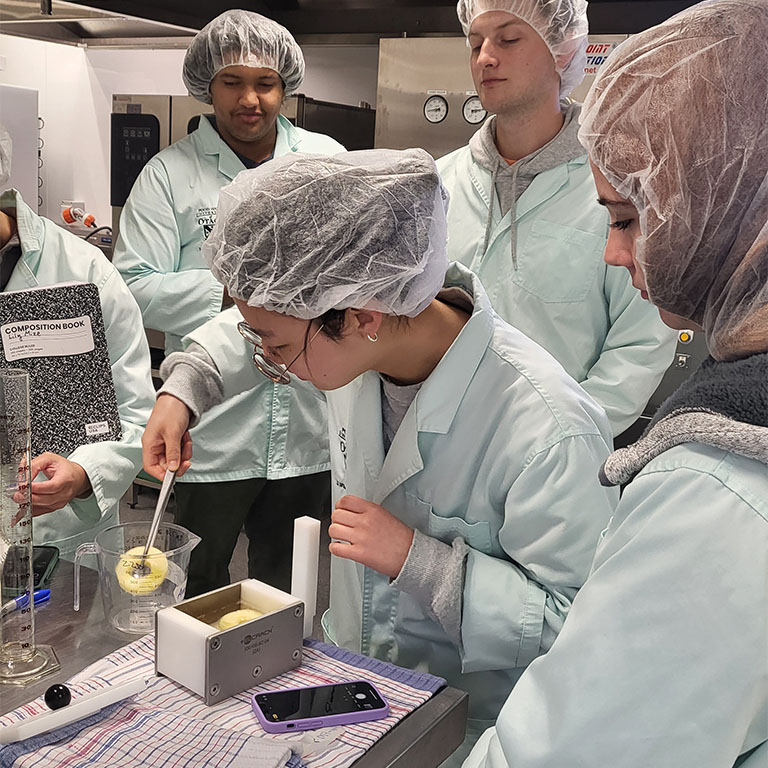
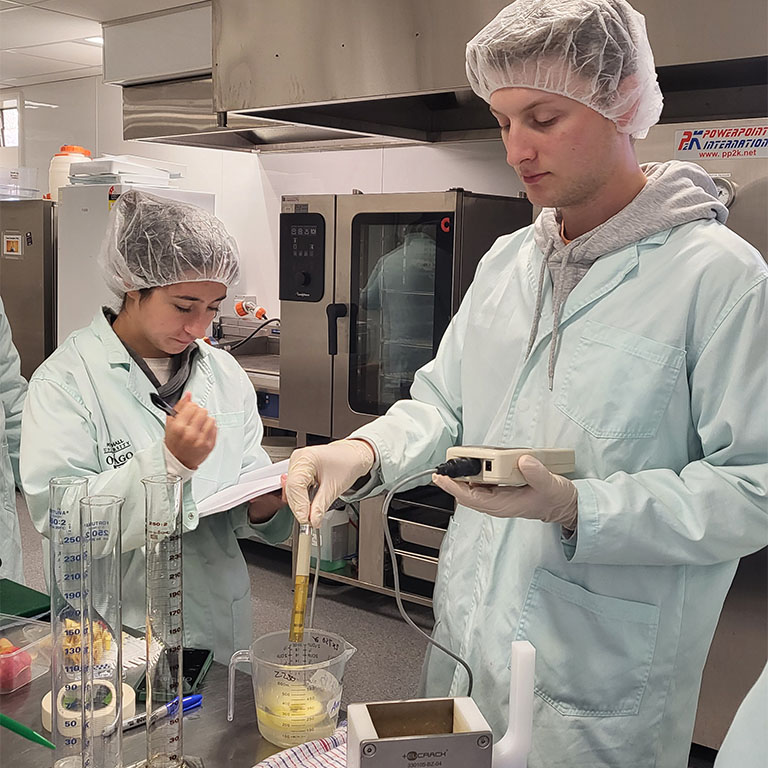

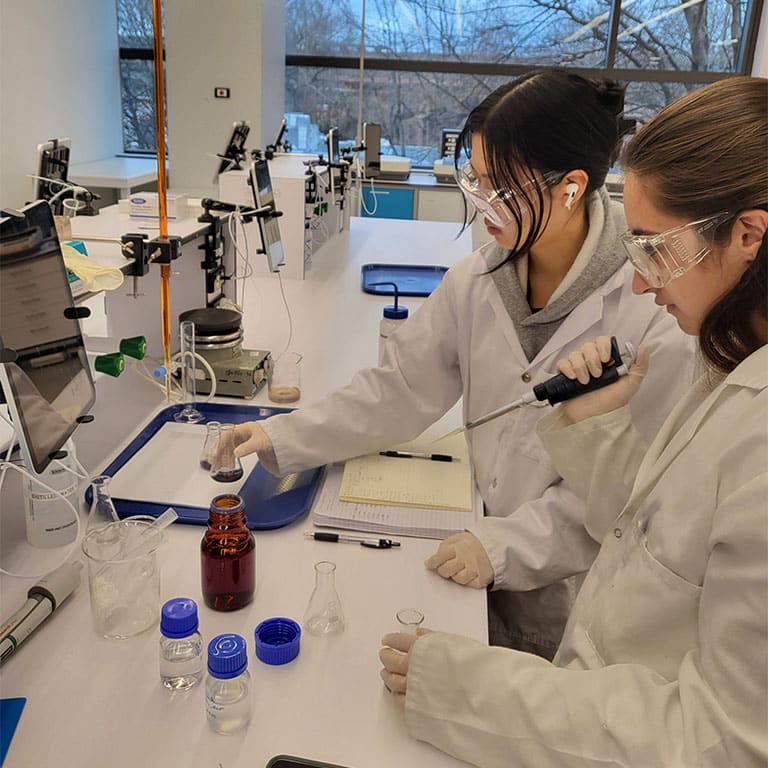
Julia Yasenchak, a junior chemical engineering major, was impressed with the equipment, tools, and devices the cohort members were able to use at Otago.
“Undergrads aren’t typically allowed in the lab that we got to work in, so we got access to technology that most of them can’t,” she said. “It was very interesting seeing what the PhD students were doing versus what we were doing since it was very rare for undergrads to be able to use that technology.”
For Roach, the lab work was a novelty.
“I had never worked in a lab before this beside basic chemistry labs,” he said. “For example, I’d never used a micro pipette before. Small things like that built up throughout the entire trip to help me gain some great experience in research and scientific procedures.”
The UT students were able to work with Alaa El-Din Ahmed Bekhit and Indrawati Oey, both professors in the Department of Food Science at Otago, while doing their research.
“They’re both very renowned people in the food industry. Just hearing about their research and what they’ve done so far was really inspiring,” said junior chemical engineering major Stephanie Cho. “It was just an honor to get to work with them and learn about what kind of research they’ve been doing.”
Back in the Lab at UT
Along with their research on campus in New Zealand, the UT students were given tours of factories and companies involved in the food industry. They were also able to explore the island country and learn more about the culture and history, visiting museums, eating among the locals, and sightseeing.
“I’ve always been a big like cultural person and love learning about new cultures,” Roach said. “There were two cultural aspects. There was the New Zealand culture, and then the Māori culture, and I think they both influenced each other quite a bit. It was just a great chance to see these cultural differences on basically the other side of the world and learn new things.”
Upon their return to UT this fall, the cohort members have continued doing research for the IRES program. They have been split into two groups, with one group working on ice nucleation with Wu, and the other working on novel biosensors to detect food pathogens with Danquah’s group. The groups will switch after six weeks.
“That has been pretty fun, because I am learning new lab techniques and learning a new lab,” Johnson said. “I haven’t been able to do research on campus yet, so that’s super rewarding, and I really enjoy that on top of my academics.”
Like Johnson, Cho’s experience in New Zealand enlightened her on the value of food science as a potential career.
“After this experience, I definitely think the food industry has become one of the few options I’m considering right now,” Cho said. “I think it’s just very cool to be working with food while in a research setting. It’s just cool to be working on something that’s such an important part of life for people.”
Contact
Rhiannon Potkey ([email protected])